Gulpy Orange vs. Pulpy Orange: what happens when you tweak a bottle to get around an injunction

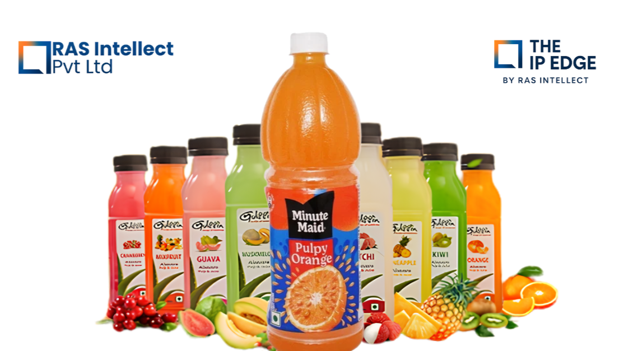
On October 6, 2026, the Delhi High Court restrained a beverage maker from using a newly shaped bottle for its “Gulpy Orange” drink, after The Coca-Cola Company argued that the bottle had been slightly changed to get around an earlier court order. Justice Vikas Mahajan examined a side-by-side comparison and recorded a prima facie view that the new bottle is “deceptively similar” to the bottle used for Coca-Cola’s “Minute Maid Pulpy Orange.”

It is a small order, five pages long, and it is worth reading for what it does and does not say. It is also a clean, everyday illustration of a question brand owners and challengers keep running into: when an injunction forces you to change your look, how much change is enough?

The backstory: an injunction from January 2025

The dispute is an ongoing suit, The Coca-Cola Company v. Chhabee Nutricos Industries LLP. On January 24, 2025, the Delhi High Court passed an interim order restraining Chhabee from dealing in goods bearing the word mark “GULPY ORANGE,” a “GULPY ORANGE” label or bottle, or any mark identical or similar to Coca-Cola’s “PULPY ORANGE” mark, its labels, or its “MINUTE MAID PULPY ORANGE” bottle. The order also barred packaging that substantially reproduces Coca-Cola’s label, and separately restrained the use of any bottle shape, or other mark, identical or similar to Coca-Cola’s registered distinctive bottle device.

Later, Coca-Cola filed an application complaining that Chhabee had not complied, limited to the old product being advertised on Instagram and other third-party websites. Chhabee complied in the meantime, Coca-Cola did not press the application, and it was disposed of on September 18, 2026.

The new application

The October 6 order concerns a fresh application, filed under Order XXXIX Rule 2A of the Code of Civil Procedure, the provision courts use to deal with disobedience of an injunction. Coca-Cola alleged that, to get around the January 2025 order, Chhabee had slightly changed the shape of its bottle, while the overall appearance remained deceptively similar to Coca-Cola’s.

The comparison placed before the court is worth noting. It set Coca-Cola’s bottle device against the bottle Chhabee is using now, not against Chhabee’s earlier bottle. After reviewing it, the court recorded a prima facie view of deceptive similarity and restrained Chhabee from using the new bottle shape until the next hearing. Chhabee was given a final opportunity to file its reply within three weeks, and the matter is listed again on January 19, 2027.

What the order does not say

Precision matters here, because the story is easy to overstate. The order does not record a finding that Chhabee wilfully disobeyed the earlier order. It does not decide the suit. It does not rule on the validity of any registration. It restrains one specific bottle shape on an interim basis, on a prima facie assessment, and Chhabee has not yet filed its reply to this application.

Why a small tweak is a risky strategy

Two ideas from Indian trademark law explain why this kind of application gets traction.

First, shapes and packaging can function as trademarks. Section 2(1)(m) of the Trade Marks Act, 1999 defines a “mark” to include the shape of goods, their packaging, and combinations of colours. That is the statutory foundation for what is usually called trade dress, and it is why Coca-Cola could rely on a registered bottle device rather than only on a word mark.

Second, courts look at overall impression rather than isolated differences. In Colgate Palmolive Co. v. Anchor Health and Beauty Care Pvt. Ltd. in 2003, the Delhi High Court recognised trade dress protection in a case where the parties’ trademarks were entirely different, noting that what matters is the overall impression a customer takes away from the colour combination, container shape, and packaging. Applied to a redesign, that approach means a few altered curves may not do much if the whole still reads as the same product.

Notice also how the January 2025 order was drafted. It was not limited to the original Gulpy bottle. It extended to shapes “identical or similar” to Coca-Cola’s registered device. That wording gives the order room to reach variants, which is the territory this application is operating in.

A pattern worth watching

The theme is not unique to this case. In June 2026, the Delhi High Court restrained a whisky brand from using “Godfather” even after it revised its branding to “The Glenwalk Godfather’s by Sanjay Dutt,” a story we covered in an earlier bulletin. The outcomes differ across disputes, though, and always on their own facts. In the US Peeps case we covered in IP Edge, a court declined to block a rival’s bunny-shaped candy precisely because the packaging was different enough to make confusion unlikely at the point of sale. The lesson is not that redesigns never work. It is that how far you move, and what overall impression remains, decides the outcome.

Practical takeaways

For a business that has to change a look after a restraint, the safer course is meaningful distance from the protected design, tested against the registered device itself, with legal advice before launch rather than after an application is filed. For brand owners, the case is a reminder to register shape and device marks, to keep side-by-side comparisons ready, and to word injunction requests broadly enough to capture similar variants. And for everyone, it is a useful reminder that an interim order is a snapshot: the final answer here will come from the court’s decision on the suit, not from this order.

Sources consulted for this piece: The Delhi High Court’s order dated October 6, 2026 in CS(COMM) 32/2025 (The Coca-Cola Company v. M/s Chhabee Nutricos Industries LLP), read directly, and LiveLawBiz ‘s report of the order (October 9, 2026); INTA’s compilation of Indian trademark case law (for Colgate Palmolive Co. v. Anchor Health and Beauty Care Pvt. Ltd.); and Khurana & Khurana’s overview of trade dress protection in India (for Section 2(1)(m)). References to the Godfather and Peeps matters draw on RAS Intellect’s earlier coverage. This piece was independently researched and written; no text has been reproduced from any source beyond the short quoted phrases above. The order is interim and the matter is pending, so the position may change.
 

Scroll to Top
Sachin Kumar

Sachin Kumar

Publication Trainee

Sachin Kumar is a Publication Trainee at RAS Intellect Solution Pvt. Ltd. Mohali. His core work is in the field of scientific publishing, research communication, and data-driven analytics. He is involved in the publication process of journal articles, conference papers and technical reports, maintaining high standards of quality and academic compliance. With a strong foundation in Business Analytics and Finance, his expertise lies at the intersection of statistics, economics, and psychology. He possesses advanced knowledge of statistical modeling, data visualization, and predictive analytics, with proficiency in Python, R, SQL, and Machine Learning. His deep understanding of statistics, combined with interests in economics and psychology, provides a unique interdisciplinary perspective on consumer behavior, market dynamics, and human decision-making.  He holds an MBA with a major in Business Analytics and a minor in Marketing from Indsearch Institute of Management Studies & Research, Pune, and a Bachelor’s in Commerce (Honours) with specialization in Finance & Accounting from Munger University, Bihar

Aman Kumar Puri

Senior Associate – Business Development

As a Senior Business Development Associate at RAS Intellect Solutions Pvt. Ltd., He is responsible for developing international business opportunities and building strategic relationships with patent attorneys, intellectual property law firms, corporate IP teams, technology companies. His role involves understanding client requirements, identifying opportunities where specialized IP support can add value, and connecting clients with our technical and intellectual property experts to deliver efficient, high-quality solutions.

His primary focus is on creating sustainable international partnerships that enable IP firms and corporate legal teams to access specialized technical expertise, scalable execution capacity, and cost-effective IP support when they need additional bandwidth or specialized capabilities. Through a combination of strategic prospecting, relationship management, consultative selling, and collaboration with technical teams, He works to create opportunities that deliver measurable value to both clients and RAS Intellect Solutions.

Karandeep Singh

IP Manager

Experienced Intellectual Property & Technology Consultant with 9+ years of experience and a demonstrated history of working in IPR Industry. Strong operations professional with a Bachelor of Engineering focused in Electronics & Communication (ECE). Well versed in handling a team of research analysts and work with them to achieve common goals.   Proficient in projects including but not limited to: · Patentability Searches, Invalidation/ Opposition/ Prior Art Searches, FTO, Landscape/White Space analysis, Portfolio Analysis, Design Searches. · State-of-the-art searches, Patent Watch, Infringement analysis · Patent Valuation/ Monetization – Qualitative/ Quantitative Methods, Net Present Value (NPV), Income Based, Market Based Approach. Handled various projects on technologies: · Quantum Computing, Random Number Generators (RNGs), Autonomous vehicle (AV) technology, EMI filters, AI, ML, AR/VR etc. · Limited projects on – 3GPP, ETSI, DVB standards. Worked on presales presentations, discussions, and client calls. Preparation of discussion initiation documents for new client engagements/ meetings and pitching. Database Expertise : Questel Orbit, Patseer, Derwent Innovation, AI based (IPRally, Ambercite, PQAI) etc.

Kriti Pandey

Senior Executive, HR & Accounts

Kriti Pandey is a Senior Executive in HR and Accounts at RAS Intellect, managing end-to-end HR operations alongside financial and compliance processes. With over three years of experience, she oversees employee lifecycle management, payroll, HRIS administration, and organizational compliance. She has worked with global teams, including supporting a UK-based workforce, and brings strong expertise in compensation, performance management, and employee engagement. An MBA in Human Resources, Kriti focuses on building structured, scalable systems that support efficient business operations. 

Kartik Chauhan

Trademark & Copyright Analyst

Kartik Chauhan is a Trademark and Copyright Analyst at RAS Intellect, working across trademark searches, application support, and intellectual property documentation. He assists in preparing filings, addressing objections, and supporting clients in securing and managing their IP rights. In addition to trademarks, he contributes to patent drafting and corporate compliance processes. With a background in computer science engineering and interests in technology law and research, he brings a multidisciplinary perspective to his work. His analytical and technical skills support both IP protection and compliance-driven initiatives.

Isha Kansal

Senior Patent Analyst

Isha Kansal is a Senior Patent Analyst at RAS Intellect, specializing in patent drafting, filing, and post-filing prosecution support. Her work involves preparing patent specifications, managing paralegal documentation, and handling renewal, restoration, and NBA-related filings. With a strong academic foundation in chemistry and hands-on exposure to organic chemistry and cosmetic science, she brings domain-specific insight to her IP work. Her expertise spans chemical, pharmaceutical, and allied science innovations, where she applies a structured and detail-oriented approach. Isha plays a key role in ensuring accuracy and consistency across critical stages of the patent lifecycle.

Dr. Neha Dhiman

Publication Lead

Dr. Neha Dhiman leads the Publications vertical at RAS Intellect, overseeing end-to-end research publication processes for journals, conferences, and technical reports. With over 12 years of experience in teaching and research, she specializes in scientific writing, academic compliance, and high-quality research communication. Her expertise spans material science, wastewater treatment, and environmental remediation using nanotechnology and agricultural waste. A Ph.D. holder and DST INSPIRE Fellow, she has authored multiple research papers and book chapters and actively contributes as a reviewer and editorial board member. Her work ensures rigorous, publication-ready outputs aligned with global academic standards. 

Shreya Singla

Director HR & Marketing  

Shreya Singla leads Human Resources and Marketing at RAS Intellect, focusing on talent development, brand building, and strategic growth initiatives. A Biology graduate from the University of British Columbia, she brings a research-driven and analytical approach to organizational development and market positioning. 

At RAS Intellect, she is actively involved in hiring, team structuring, and strengthening internal processes, while also driving digital marketing, content strategy, and outreach initiatives. Her work has contributed to significant growth in the firm’s online presence, including increased website traffic, high-engagement campaigns, and expanding visibility across domestic and international audiences. 

She plays a key role in scaling flagship initiatives such as RASPREP, managing student engagement, program execution, and outreach. With a blend of analytical thinking and creative execution, she focuses on building scalable systems, strengthening brand identity, and aligning talent with long-term organizational goals. 

Atul Singla

Co-founder & Director 

Atul Singla is a Co-founder of RAS Intellect and a seasoned industry leader with extensive experience in manufacturing, operations, and business development. As Managing Director of Cable House, Chandigarh, he has led the growth of a well-established enterprise in electrical cables, wiring systems, and allied infrastructure solutions. His expertise spans strategic planning, supply chain management, vendor coordination, and operational scalability across industrial environments. 


With a strong focus on quality compliance and execution efficiency, he brings a practical, business-oriented perspective to organizational growth. At RAS Intellect, he contributes to strategic direction, operational structuring, and long-term business expansion. His approach is rooted in building sustainable systems, ensuring reliability, and driving consistent value across operations. 

Dr. Ruchi Singla 

Director & CEO 

Dr. Ruchi Singla is the Director and CEO of RAS Intellect, bringing over two decades of experience across research, innovation, and academic leadership. She serves as a Scientific Advisor to IP India and has previously held leadership roles including Director at ACIC RISE (NITI Aayog) and Associate Director at Chandigarh University. An accomplished innovation leader, she has guided over 2,300 patent filings and led the establishment of multiple Centres of Excellence, with a focus on emerging domains such as AI, drones, and cybersecurity. 


Recognised among the top mentors in India, she is a Regional Mentor of Change under the Atal Innovation Mission and has actively supported startups, particularly in the agritech space. Dr. Singla holds a Ph.D. in Wireless Communication and is a certified Canadian Patent Administrator from the Intellectual Property Institute of Canada. With extensive contributions to research, patents, and innovation ecosystems, her work is centered on building scalable, impact-driven intellectual property and research frameworks. 

Vanshika Sharma

Business Development Analyst

Vanshika Sharma is a Business Development Analyst at RAS Intellect, with experience in lead generation, client outreach, and academic program management. She is responsible for identifying prospective clients, managing CRM systems, and coordinating outreach for IP services, publication support, and the RASPREP program. She also plays a key role in managing RASPREP operations, including student coordination, communication, and lead tracking. In addition, she supports patent-related work through prior art searches. With a background in computer science and ongoing MBA in Marketing and AI in Business, she brings a structured and data-driven approach to business development. 

Anu Bala coloured

Anu Bala

Intellectual Property Team Lead

Anu Bala is a seasoned intellectual property professional with over 16 years of experience across patents, trademarks, copyrights, and technology transfer. As IP Lead at RAS Intellect, she leads patent drafting and filing strategies, prior art searches, and end-to-end IP prosecution, while also advising on commercialization-focused IP pathways. A Registered Indian Patent Agent and empaneled facilitator under the Startup India SIPP Scheme, she brings strong regulatory and strategic expertise to complex IP matters. She has previously contributed to national-level policy initiatives at ICMR, including the ICMR–DHR Policy on Biomedical Innovation and Entrepreneurship, and has been actively involved in capacity-building and translational research programs. Recognized among the DST Women Scientists under the WISE–KIRAN programme, Anu’s work is centered on transforming research into well-protected, market-ready intellectual property.

Suryavanshi Katoch

Patent Drafter

Suryavanshi Katoch is a Patent Drafter at RAS Intellect, specializing in patent drafting, techno-legal analysis, and IP documentation. He has experience working on Indian, U.S., and European patent applications, including claim drafting, FER responses, and invention disclosure development. His technical background in electronics and communication engineering enables him to work across domains such as electronics, mechanical systems, and robotics. He also supports design filings through 3D design preparation and documentation. With a strong focus on clarity and structure, he contributes to developing precise, protection-oriented patent specifications.