
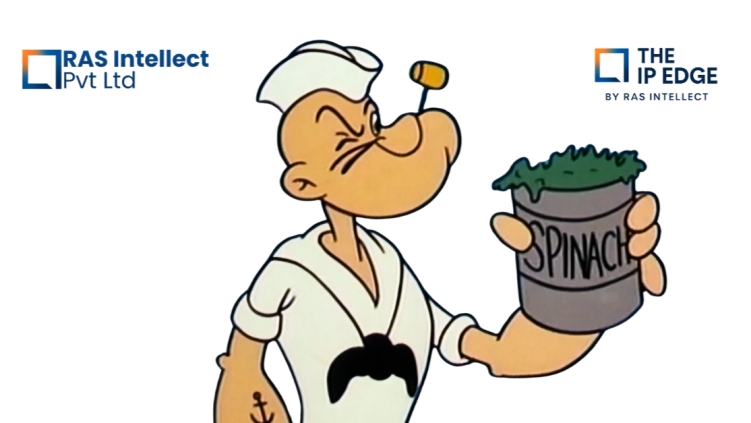
On January 1, 2025, the earliest version of Popeye, from E.C. Segar’s 1929 comic strip Thimble Theatre, entered the public domain in the United States, ninety-five years after his debut, exactly as U.S. copyright law allows. Anyone can now legally draw Popeye, write new Popeye stories, or put him in a film without paying anyone or asking permission. One of the first things anyone did with that freedom was make a horror movie called “Popeye the Slayer Man,” released later that year.
What happened next is a cleaner illustration of a distinction most people get wrong than almost any other public domain story in recent memory: a company tried to build a business around the newly free character, and ran straight into a trademark fight that has nothing to do with copyright at all.
What actually expired, and what didn’t
Copyright and trademark protect different things, and they run on completely different clocks. Copyright protects a specific creative work and expires on a fixed schedule, ninety-five years from publication for works from this era under U.S. law. Trademark protects a brand identifier, a name, logo, or symbol used in commerce, and it does not expire on any schedule at all. A trademark lasts for as long as its owner keeps actively using it and defending it, full stop.
That means the 1929 Popeye comic strips themselves are now free to copy, adapt, and build on. But “Popeye” as a brand name, as used to sell products or services, is a separate legal question entirely, and Hearst Holdings, the company that has owned Popeye’s trademarks for decades, still holds active federal registrations covering things like entertainment services, costumed character appearances, and merchandise.
The wrestling ring is where it’s being tested
Nine days after Popeye’s copyright expired, a company called Freedom Pro Wrestling filed an application to register “POPEYE” as a trademark for live wrestling entertainment at stadiums. The U.S. Patent and Trademark Office initially denied the application, then published it for opposition. Hearst Holdings responded by formally opposing the registration before the Trademark Trial and Appeal Board, arguing that using “Popeye” for wrestling could confuse consumers into thinking the bout was affiliated with or endorsed by the real Popeye brand, and that it risked diluting and tarnishing decades of established goodwill in the name. Hearst’s filing leaned on the character’s own reputation for a physical fight, noting dryly that Popeye is, after eating his spinach, good at that sort of thing.
Freedom Pro Wrestling had until April 13, 2026, to respond and begin formal TTAB proceedings. If the case runs its full course, it could stretch into 2027, and either party dissatisfied with the Board’s decision could still take it to federal court after that. If Freedom Pro Wrestling doesn’t respond at all, its application is simply treated as abandoned, a common enough outcome when a smaller operation faces a company with Hearst’s litigation resources.
This has happened before, and it will happen again
Popeye is following a well worn script. When the earliest version of Mickey Mouse entered the public domain on January 1, 2024, independent filmmakers raced to make horror films featuring the character within days, including “Mickey’s Mouse Trap” and a slasher film eventually released as “Screamboat.” The Walt Disney Company‘s public response at the time was explicit: the company said it would keep protecting its trademark rights and would act against anything that caused consumer confusion about an official connection to Disney, even as it acknowledged the underlying 1928 film itself was now free to use. The character in these films was carefully never called “Mickey Mouse” on screen, a workaround clearly built with trademark exposure in mind.
Winnie the Pooh went through the same thing a year earlier. Months after A.A. Milne’s original 1926 book entered the public domain, “Winnie the Pooh: Blood and Honey” turned the bear into a horror movie villain, and grossed enough to justify a sequel. And long before either of them, the estate of Arthur Conan Doyle spent years in court trying to argue that Sherlock Holmes and Dr. Watson should stay protected even after most of the original stories had entered the public domain, a fight the estate ultimately lost at the Seventh Circuit in 2014.
Why this is worth understanding, not just watching
The lesson underneath all of these cases is the same one, and it applies well beyond cartoon characters. Letting a copyright expire, or having it expire on you, does not clear a brand for commercial use. It only opens up the specific creative work itself. Anyone building a business on a newly public domain character still has to clear a second, entirely separate hurdle: does using that name or likeness in commerce create confusion with a trademark someone else still actively owns. Freedom Pro Wrestling’s application shows how easy it is to miss that distinction, and Hearst’s opposition shows how seriously trademark owners take it once the copyright door has swung open. Expect the same pattern every January, as more characters from the 1930s age into the public domain and the next round of public domain horror movies, wrestling promotions, and merchandise lines run the same test all over again.
Sources consulted for this piece:
- Mandour & Associates, “Popeye Enters Public Domain, But a Trademark Fight Is Brewing,” California Trademark Attorneys blog, February 19, 2026
- Lutzker & Lutzker LLP, “Protecting the Strength of the Popeye Trademark,” IP Bits & Pieces, March 23, 2026
- USPTO trademark registration records for Hearst Holdings, Inc. (POPEYE marks), via Justia Trademarks
- Variety, “‘Steamboat Willie’ Horror Film Announced as Mickey Mouse Enters Public Domain,” January 2, 2024
- The Hollywood Reporter, “Disney’s Earliest Mickey and Minnie Mouse Set to Enter Public Domain,” January 2024
- NBC News, reporting on Mickey Mouse public domain horror films and Disney’s trademark statement, January 2024
- AOL/Yahoo Entertainment, reporting on “Winnie the Pooh: Blood and Honey” and the Conan Doyle estate’s Sherlock Holmes litigation
- Wikipedia, “2025 in comics,” for the public domain entry dates of Popeye and related Thimble Theatre characters
This piece was independently researched and written for IP Edge; no text has been reproduced from any source. The Hearst Holdings v. Freedom Pro Wrestling opposition is an active, unresolved proceeding before the Trademark Trial and Appeal Board, and its outcome may not be known for some time.